
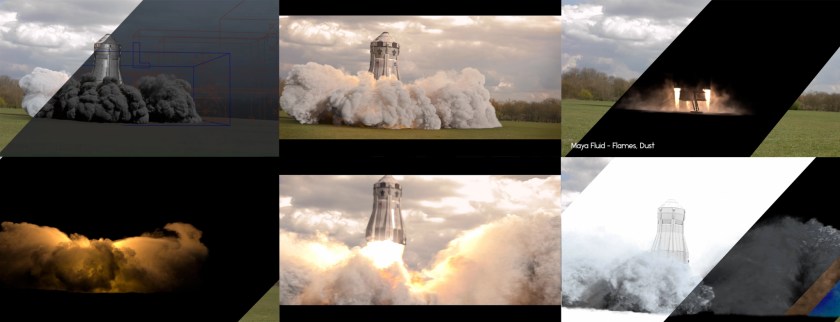
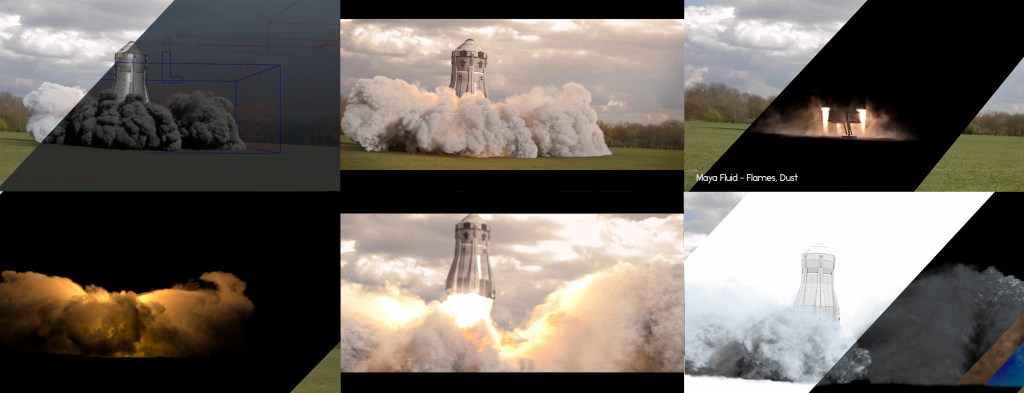
Compositing is the art of layering and combining visual components originating from different sources, to achieve a seamless single element. Think about a shot in which the hero jumps from a sci-fi vehicle onto a starship, ready to speed up towards to open space. Compositors will probably have to use a chroma key to separate the actor from the green screen and combine the cut-out with the background, for both full CG and live-action. Then they would add several CG elements created by the 3d departments like starships, explosions, debris, and maybe set extensions to fill some gaps (the list could go on and on!). Eventually, all these elements will have to look like they’ve always been part of the final image so that the viewers’ suspension of disbelief is assured.
It is a fascinating, indispensable and highly rewarding job and yet, ironically, somewhat mysterious. But compositing (and visual effects in general) has always been closely related to cinema since the very beginning, as it is often in the nature of the artist’s process to push the boundaries of reality and blend dreams into it. Indeed, some aspects and techniques of compositing go back as far as almost 170 years ago, when the Victorian photographer Oscar Gustave Rejlander combined 32 parts of different films into a single image.

In 1895 Alfred Clark, a music recording and cinema pioneer, directed The Execution of Mary Stuart, a silent trick film displaying visual effects for the first time: when the executioner is about to strike, the camera stops and the actor impersonating the queen is replaced by a mannequin. The camera starts filming again and the axe chops off the fake head. A very simple and ingenious technique known as stop trick. French magician, actor and director George Méliès, apparently discovered the same technique by accident when his camera jammed while shooting in a street in Paris. Much to his wonder, later on during the screening, he saw a truck turning into a hearse, people changing directions and men turning into women.
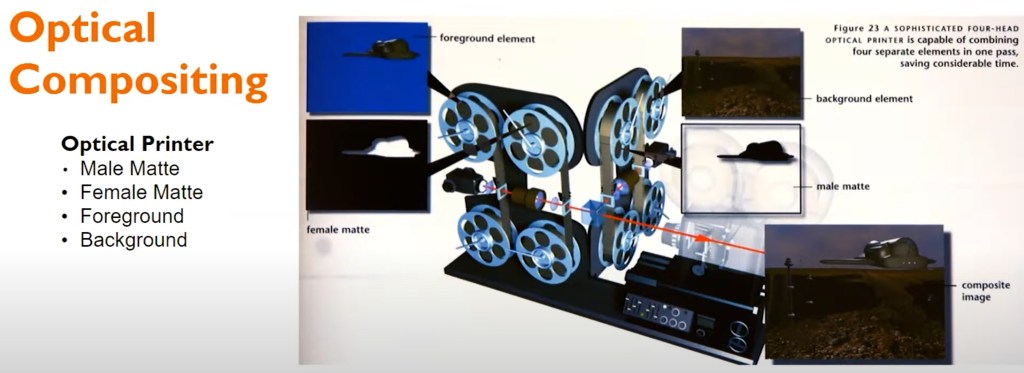
Over the decades, practical, in-camera effects like stop trick, stop-motion, miniatures and multi-exposures have been largely used and developed, often enhanced by other inventions like the Optical Printer, a device that uses one or more projectors anchored to a camera to shoot more strips of film together. The result is a seamless image or sequence displaying elements originally filmed in different moments and situations. The first legendary Star Wars trilogy (1979-1983) was made entirely using miniatures and matte-paintings merged over the in-camera filmed sequence (also called plate) with an Optical Printer. The basic idea is to combine mattes, black and white images that decode which parts of the film are visible and to what degree. That’s the beginning of Composting as we now know it.
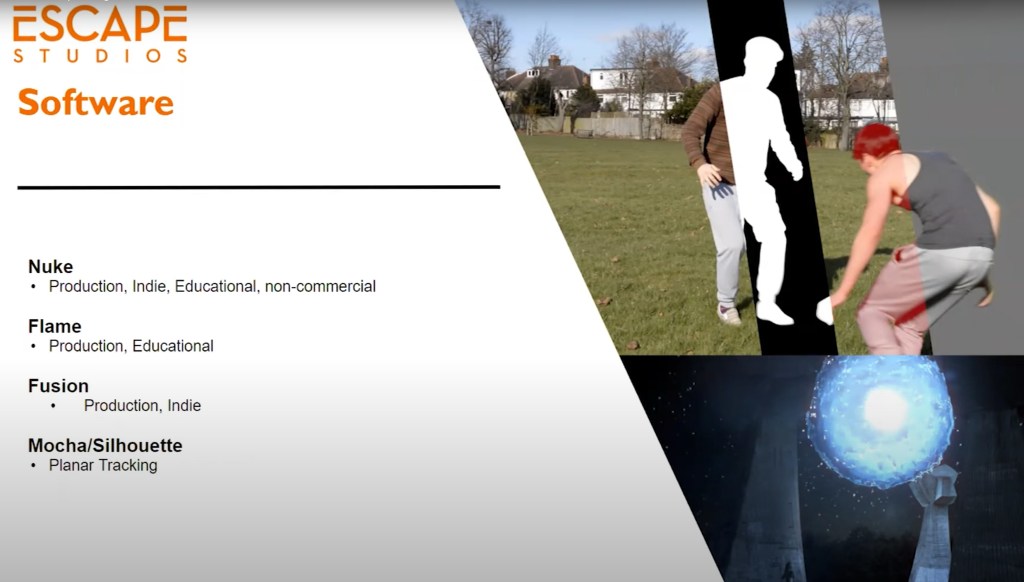
Although some filmmakers are still keen to use in-camera effects, nowadays Compositing is an entirely digitalised process and Nuke is the standard software in the film industry. Merging two or more sequences is now easily achievable with a simple tool like a Merge node and techniques like 3D projections.
 THE ART OF VISUAL EFFECTS AT ESCAPE STUDIOS
One comment