
What?
Two of the leading platforms currently used by the VFX industry are Nodal systems.
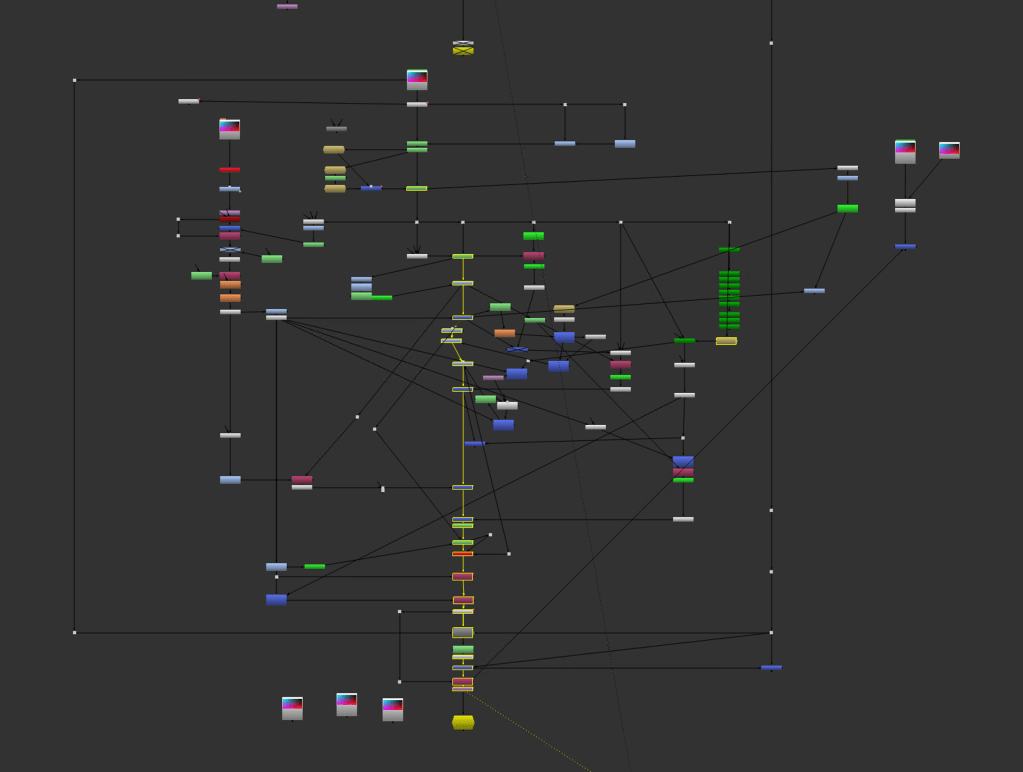
Nuke is a node-based digital compositing and visual effects application first developed by Digital Domain, now developed by Foundry and employed for television and film post-production.
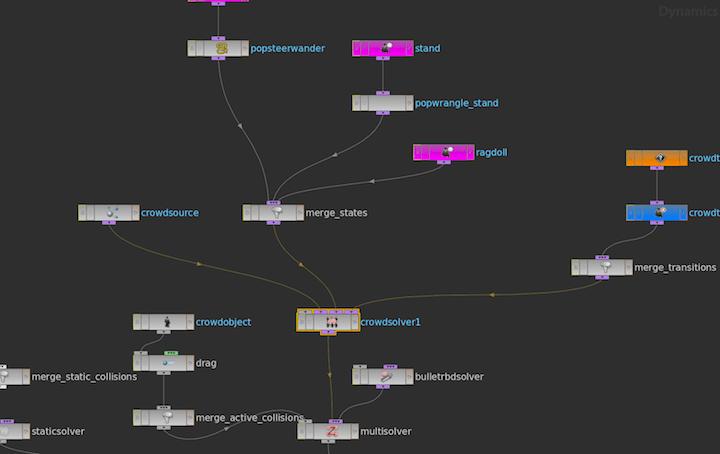
Houdini is a 3D animation software application developed by Toronto-based SideFX, who adapted it from the PRISMS suite of procedural generation software tools.
Both use a network of interconnected nodes in order to apply complex tasks and processes for the purpose of generating Visual Effects and Images.
How?
Nodes can be seen as individual building blocks of a much larger ensemble, like the many Lego bricks of a construction project. Each nodes tend to perform a specific task such as applying blur or modifying the colors of pixels.
Nodes typically have INPUTS and OUTPUTS, enabling pixels or 3D processes to transit through them. They also display a range of parameters winch can be updated by the VFX artist.

Why?
As opposed to layer-based or timeline-centric systems, Nodal Platforms such as Nuke and Houdini provide 3 crucial advantage:
- Readability
- Navigability
- Flexibility
READABILITY
Node-networks are like road maps. It enables to see any projects at once from a bird eye view.
NAVIGABILITY
For the same reason, any given points of the project is visible and accessible instantly by simply ‘zooming in’
FLEXIBILITY
Any nodes of the network can be rewired to any other area of the project, allowing endless possibility with unparalleled efficiency.
So it’s no wonder that Nodal Platforms are the kind of software employed at top level of the VFX industry. They require some adaptation coming from conventional application such as After Effect but once tried, one would never look back.
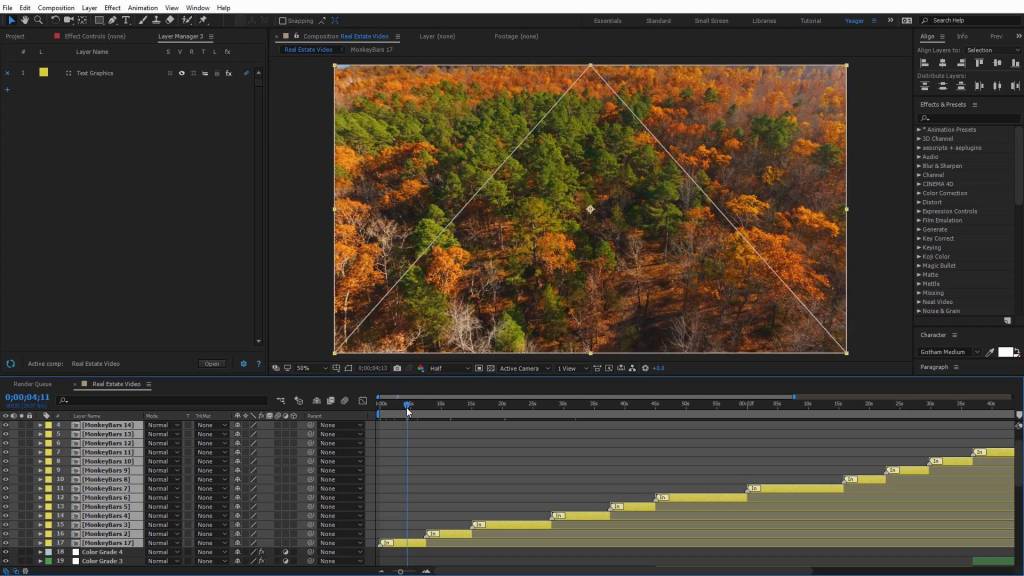
If you’re interested in exploring the facilitating power of Nodal software, have a look at our range of courses for Visual Effects.
 THE ART OF VISUAL EFFECTS AT ESCAPE STUDIOS