

Let’s just stop what we are doing and ask young people around us today, and any other day, “How are you?”
We have been talking about the pandemic of mental illness among the young for years but never actually checked what they are doing in their ‘safe’ bedrooms, who they are communicating with in the cyberspace or whose ideas they are absorbing.
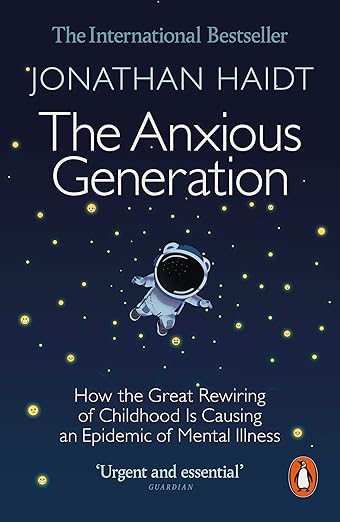
There is no excuse now not to get involved. The research on the impact of the smartphones on the mental wellbeing of young people is laid out in Jonathan Haidts eye opening book ‘The Anxious Generation’ which explains how from ‘2010 when teens traded in their flip phones for smartphones packed with social media apps, unsupervised time online soared while face-to-face conversations with friends and family plummeted, and so did mental health.’
The extreme effect of this isolation has been portrayed in the ‘Adolescence’, the brilliant British drama on Netflix, ground-breaking work on so many levels.
- The message.
The shocking realisation that our children are not safe at home, in their rooms, where they inhabit a separate world from ours, a world of bullying and toxic masculinity spread by Andrew Tate and alike sent shivers through our spines. ‘Adolescence’ showed us the most extreme consequences of inhabiting that world. Shockingly, some of the perpetrators are now so powerful through their wealth they are setting government agendas telling us we need more masculinity, telling us there doesn’t need to be fact checking in our social media and telling us we don’t need democratic government institutions supporting the most vulnerable in our societies.
We really need to rethink what sort of world we want our children to grow up in. As Stephen Graham says: ”It takes a village to bring up a child.” Everyone has a role to play, from parents to schools and governments. According to Unison a total of 1,243 council-run ‘Youth Centres’ closed between 2010 to 2023 leaving young people isolated and exposed to harm. We need them back so our children can socialise in the safe environments interacting with positive role models.
- The filmmaking.
‘Adolescence’ felt more like BBC or ITV than Netflix because of the most amazing British cast and crew, our joy and pride of pure craftsmanship in storytelling, acting and filmmaking (clips in comments).
The script and acting were immaculate, not a word short or a word extra. The interaction between actors was seamless. The decision to film in one take was a courageous one, requiring detailed planning, theatre play like rehearsals and a great choreography. You could feel everyone was all in, in creating a pure masterpiece. The seamless journey of the camera, being passed from one cameraman to another and then being on a drone was ingenious as it took us all in, on the most exhilarating and frightful journey, in real time. Dedicating one episode to the horrific event, using two episodes on finding out the cause and then showing us the impact on the family in the last one was a stroke of genius as we have been exposed to a much deeper analysis of the failings of parenthood, the failings of schools and the failings of society.
Links:
Adolescence IMDB full Cast and Crew
Adolescence Single Take Filming
Adolescence Ashley Walters on Andrew Tate
 THE ART OF VISUAL EFFECTS AT ESCAPE STUDIOS